
FISC Labs
My research programme for developing and testing ideas about artificial instinct. I’m interested in what a system can learn from experience and whether that can help it recognise harm before it happens.
FISC Labs grew out of a question my work on Zero Trust kept bringing me back to. Knowing who can act and where their authority comes from is essential. I also want to understand how an action fits into what has happened so far, who or what it might affect and whether the available evidence still holds.
How I approach the research
I start with something the software ought to be able to recognise and decide how I’d tell whether it had made a difference. That means looking at changing evidence, the authority behind a proposed action and the consequences for the people doing legitimate work. Comparing an idea with an existing approach helps me decide what is worth carrying into the software.
One question runs through that work. Experience might help a system notice a risk sooner, but can it also recognise when its own protection is inadequate? I’m testing whether recognising those gaps can improve protection, while keeping clear, independently enforced limits on the actions the system can take.
The published papers
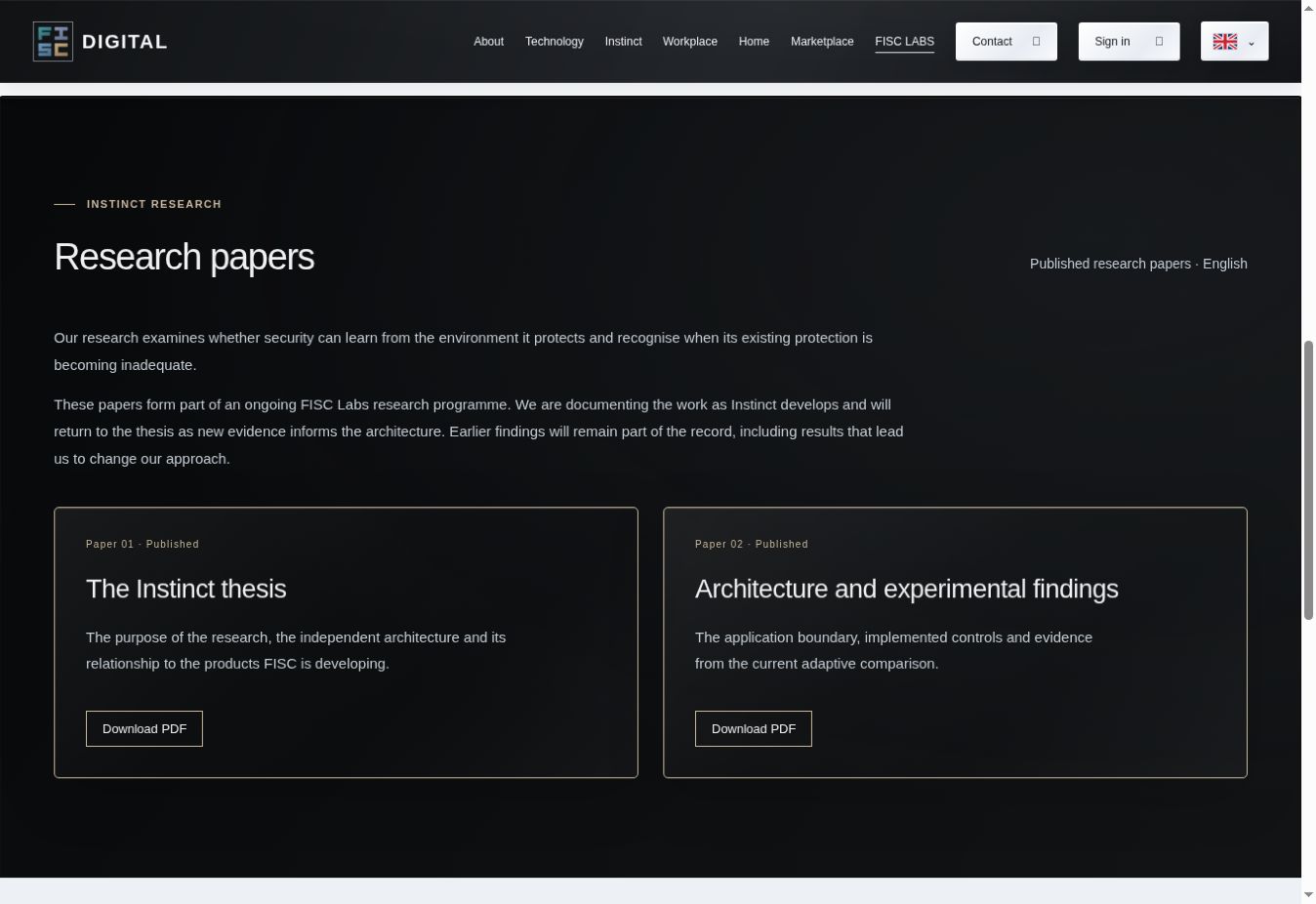
Paper 01, The Instinct thesis, sets out the idea of artificial instinct and the questions it raises for security architecture. Paper 02, Architecture and experimental findings, follows the idea into a local implementation. It explains what the controls enforced, where the experiment fell short and why the evidence for an action still needs to be current.
In Paper 03 I follow what happens when someone puts together information they had permission to receive. The tests showed that an earlier warning could give us more time to act, while the checks we had available still let the same confidential information through.
The papers on FISC Digital contain the methods, figures and detailed findings from the published studies.