
PokeCardr
Collecting Pokémon cards with my children led me to build an application for identifying a card and understanding the evidence behind its value.
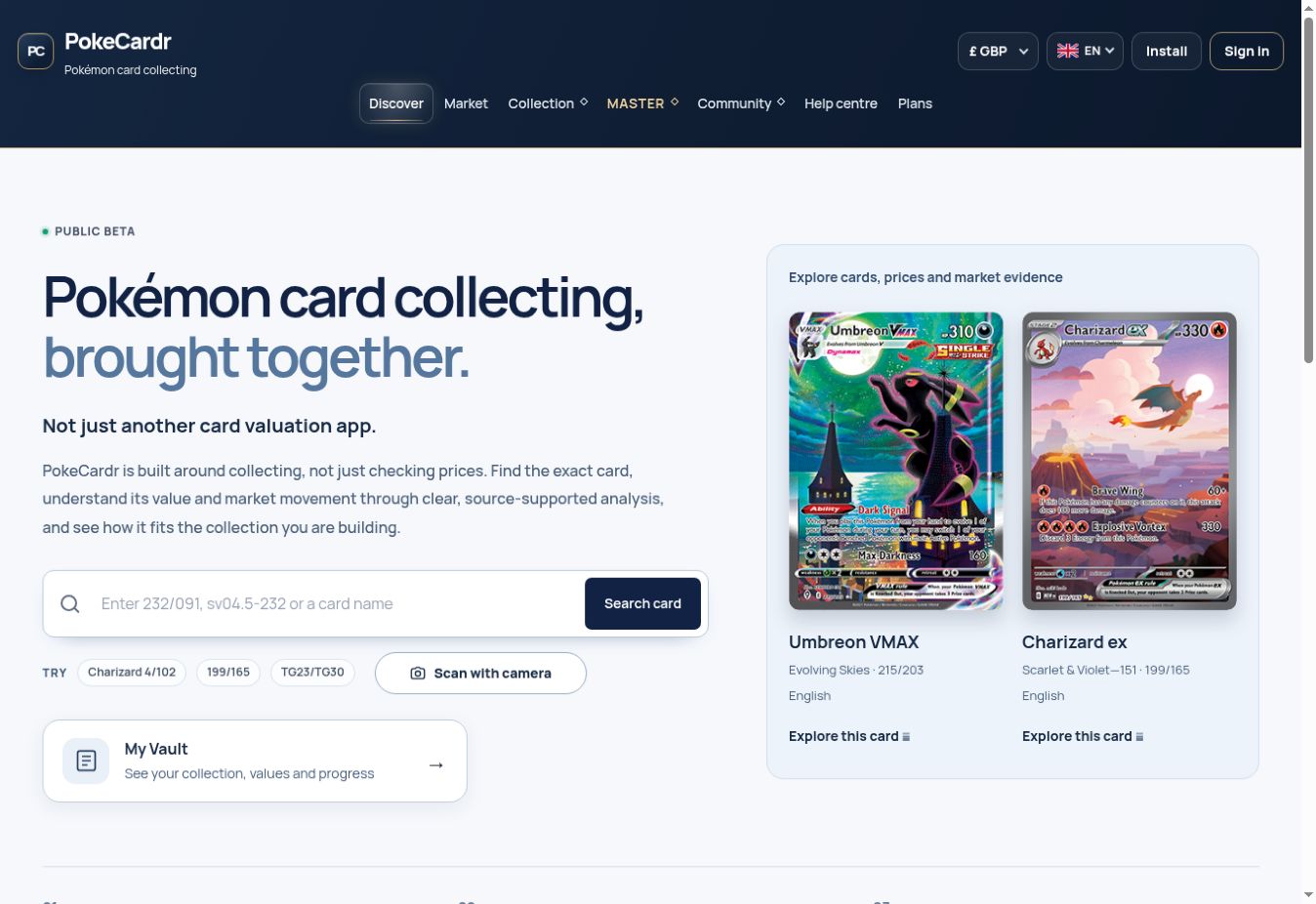
PokeCardr started with collecting Pokémon cards with my children. We could recognise the Pokémon, but working out exactly which printing we had and what it might be worth was a different question. I wanted to bring those two parts of collecting together.
From idea to application
I used AI-assisted development to take PokeCardr through concept and design to a working application. That experience is part of what led me to explore other uses for the same approach.
I worked out what I wanted the search and card pages to show, used AI to help implement them, then checked the results against the card in front of me. Two cards can share a name and artwork but belong to different sets or have different finishes. Designing around that distinction mattered more than putting a single price on the page.
What goes into a valuation
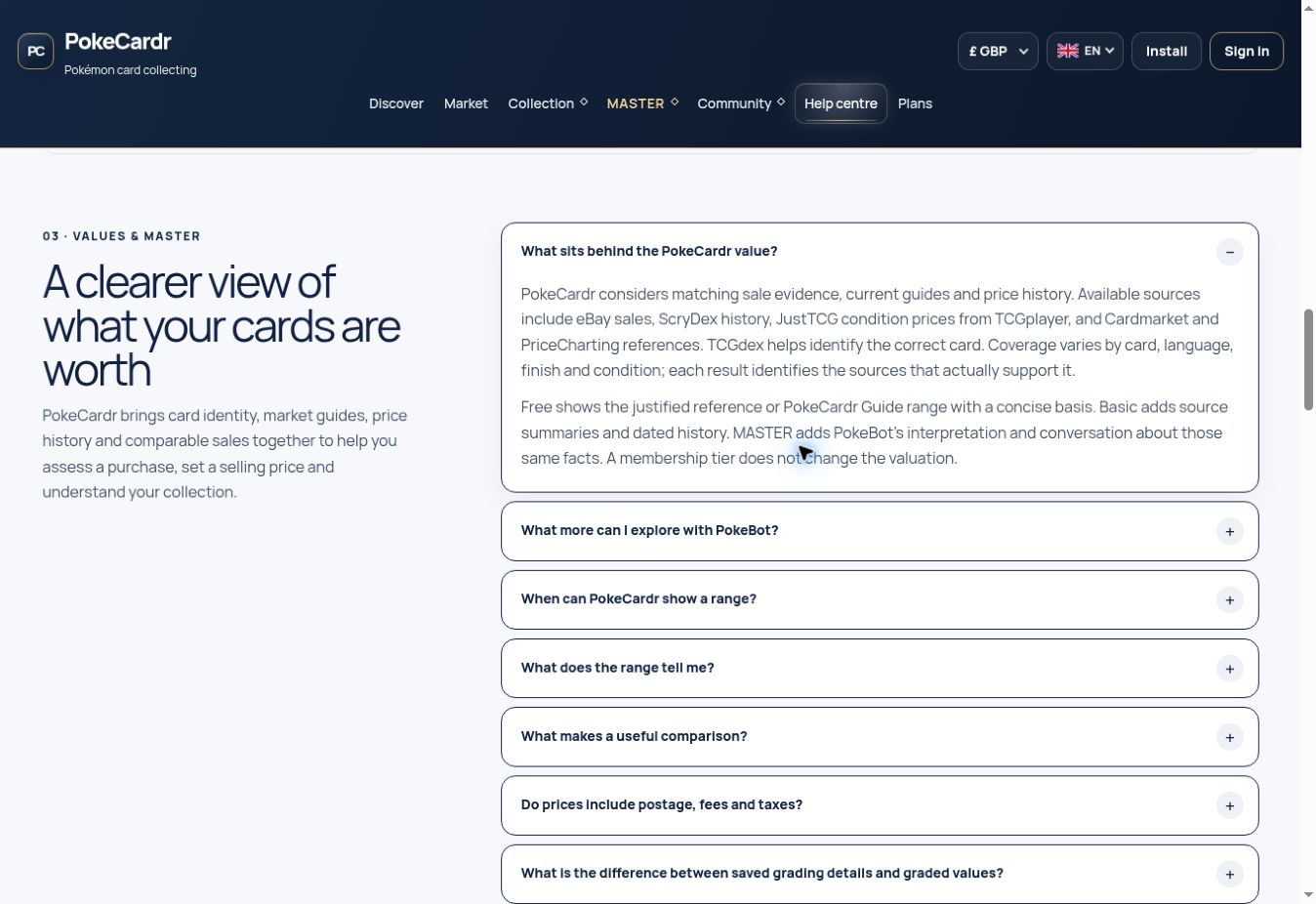
Connecting catalogue and market-data APIs taught me that finding a price and finding a comparable sale are different jobs. Set, language, finish and condition all affect the comparison. The guide explains which sources support a value and where the evidence runs out.
That became an interface question too. If the data is missing, leaving a gap tells a collector more than borrowing a price from a similar card. A guide value is an estimate, and the eventual sale can differ.
Where it stands
Development is paused. I’ve kept the working version and the material behind it.